Dental health guide
Because dental health is more than clean teeth
Dental problems are common in dogs and cats, and pets are good at hiding discomfort. Here's what to watch for, what happens beneath the gums, why veterinary dental care matters, and the simple habit that helps most.
This guide is general information, not veterinary advice. Your veterinarian knows your pet best.
Signs of dental problems
Many of these signs need veterinary evaluation, and significant pain, difficulty eating, facial swelling, or serious bleeding should be seen by a veterinarian promptly. Questions about what you've noticed? We're always happy to help.
- Bad breath that's new or getting worsePersistent odor often points to bacteria and gum inflammation.
- Red, swollen, or bleeding gumsHealthy gums are pink and firm where they meet the teeth.
- Brown or yellow buildup near the gumlineTartar collects where tooth meets gum, and bacteria collect beneath it.
- Changes in eatingChewing on one side, dropping food, eating slowly, or avoiding hard food or treats.
- Pawing at the face or mouthOr rubbing the face along the floor or furniture.
- DroolingEspecially if it's new, or tinged with blood.
- Loose, broken, or discolored teethA broken tooth with a pink or dark center needs prompt veterinary attention.
- Swelling of the face or jawSwelling below the eye can be a sign of a tooth root infection.
- Cats: drooling, grooming less, or reluctance to eatCats often show dental pain through subtle behavior changes rather than obvious signs.
- Lumps or sores in the mouthAny growth in the mouth should be examined by a veterinarian.
How dental disease develops
Plaque forms
A soft film of bacteria builds up on the teeth every day. Brushing can remove it at this stage.
Tartar hardens
Plaque that stays on the teeth mineralizes into tartar, which brushing can't remove.
Gums become inflamed
Bacteria along and beneath the gumline irritate the gums. This early stage, gingivitis, can often be reversed with veterinary care.
Support around the teeth breaks down
Over time, inflammation can damage the tissue and bone that hold teeth in place. This is periodontal disease, and it happens below the gumline, where it can't be seen.
Because the most important changes are hidden, your veterinarian may recommend probing and dental X-rays under anesthesia to see what's really going on.
Why veterinary dental care matters
- Regular examsYour veterinarian checks your pet's mouth at routine visits and can spot problems early.
- Dental procedures under anesthesiaAllow a complete exam, cleaning below the gumline, dental X-rays, and treatment such as extractions. No awake service can do this.
- A plan for your petYour veterinarian can recommend how often your pet needs dental care, and whether awake maintenance is appropriate for your pet at all.
Brushing at home
Daily brushing is ideal. Even a few times a week helps. Keep sessions short and positive.
Choose pet toothpaste
Use a toothpaste made for pets. Never use human toothpaste, which can contain ingredients that are harmful to pets, such as xylitol.
Start with a taste
Let your pet lick a little toothpaste from your finger for a few days so it becomes a treat.
Touch the teeth and gums
Gently lift the lip and rub a finger along the outer surfaces of the teeth. Praise and stop while it's still going well.
Introduce a soft brush
Use a soft pet toothbrush or finger brush. Angle the bristles toward the gumline and use small, gentle circles on the outer surfaces.
Build the habit
Brush at the same time each day, add a few teeth at a time, and finish with something your pet loves.
Other helpful habits
- Look for the VOHC sealThe Veterinary Oral Health Council lists dental chews, diets, and other products that have met its standards for reducing plaque or tartar.
- Be careful with very hard chewsBones, antlers, and other very hard items can fracture teeth. Ask your veterinarian which chews are safe for your pet.
- Check the mouth regularlyA quick look once a week helps you notice changes early.
When to call your veterinarian promptly
Facial swelling, a broken tooth, bleeding from the mouth, or a pet that stops eating should be seen by a veterinarian soon, not at a maintenance visit.
Where awake maintenance fits
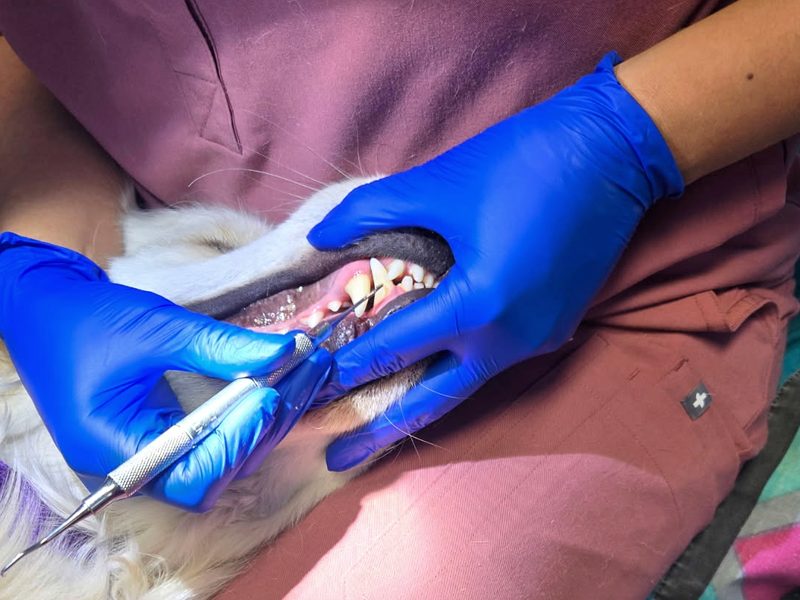
Supervised awake cleaning removes visible plaque and tartar from accessible tooth surfaces, including along the gumline, for some healthy, cooperative pets, without cleaning underneath the gums. It doesn't prevent gum disease or replace veterinary dental care. Learn what our planned visits will and won't do.